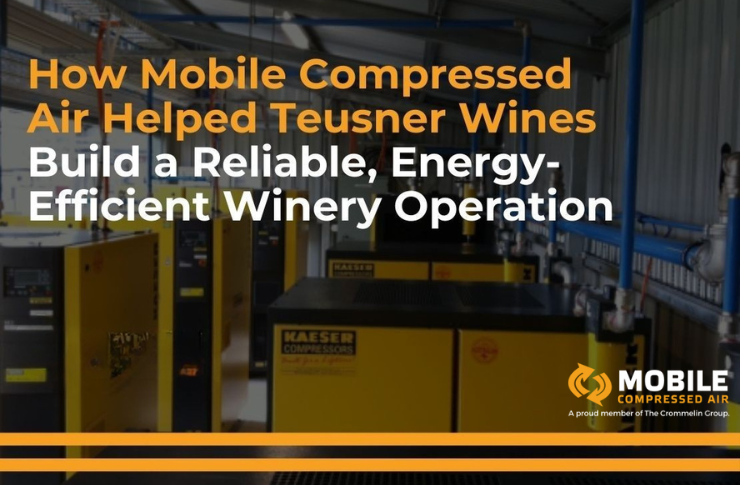
How Mobile Compressed Air Helped Teusner Wines Build a Reliable, Energy-Efficient Winery Operation
Teusner Wines Case Study Background
Teusner Wines, an award-winning producer based in South Australia’s Barossa Valley, is known for its commitment to showcasing fruit from some of the region’s oldest vineyards. With vines dating back over 130 years, the winery’s philosophy is focused on expressing the natural character of each vintage, and that means close attention to every step of production.
As demand for their wines grew, Teusner made the decision to invest in a new, purpose-built winery. This included expanding their processing capability with two large pneumatic grape presses. The new presses would allow Teusner to process greater volumes of fruit during the harvest window while maintaining their signature hands-on approach, crushing one small picking bin at a time to carefully monitor flavour, aroma, colour, and structure.
To support the presses, Teusner required a compressed air system that was energy-efficient, dependable under pressure, and built to handle seasonal peak demand without compromising performance or wine quality.
The Problem
Crushing is at the heart of modern winemaking. At Teusner, it’s a process powered by pneumatic presses, which use compressed air to gently extract juice from freshly picked grapes. The system inflates a sealed bag inside the press, pushing the fruit against a curved sieve to separate juice from skins with minimal force and oxidation.
With a typical harvest lasting around three months, the work is intense and time-critical. A press failure during peak season isn’t just inconvenient, it puts tonnes of fruit and thousands of litres of wine at risk.
When Teusner scaled up to include two larger presses in their new facility, their existing compressed air system was no longer suitable. They needed a system that could deliver clean, stable air on demand, with enough capacity to keep pace with the crush, and enough efficiency to control operating costs year after year.
The installation also had to support fluctuating demand. While harvest volumes are high, the two presses don’t run simultaneously; they work in staggered sequences, creating variable air loads across the day. Teusner needed a solution that could handle these load cycles without wasting energy or oversizing equipment.
The Solution
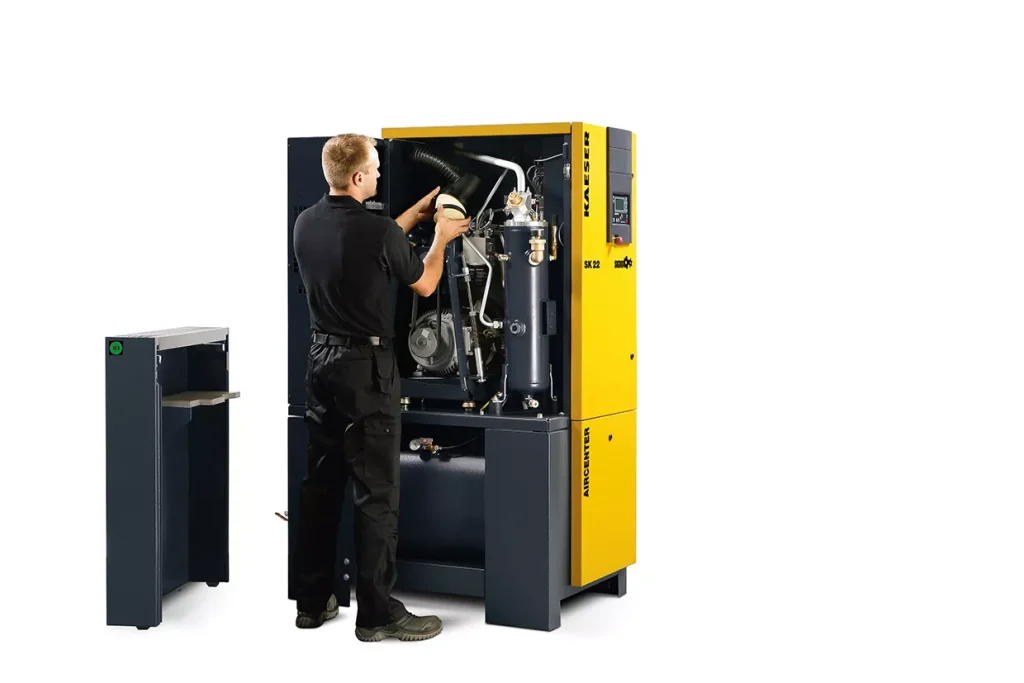
Mobile Compressed Air reviewed Teusner’s requirements and recommended the installation of two KAESER SK 25 rotary screw compressors, along with a 5,000-litre air receiver. This approach offered the flexibility, reliability, and energy efficiency the winery needed, without overcapitalising on a system that would sit idle outside of harvest.
By specifying two 15 kW compressors rather than one larger machine, the system was able to handle the alternating crush cycles efficiently. When one press is active, the compressors work together to maintain air pressure. As the cycle pauses, the receiver has time to refill, reducing energy use and equipment strain.
This configuration delivered two key benefits.
First, it kept capital expenditure low. Teusner only invested in what they needed, with capacity matched to real working patterns, not theoretical maximums.
Second, it ensured efficient running during peak periods. The staggered load gave the compressors breathing space between cycles, avoiding constant full-load operation and reducing wear across the system.
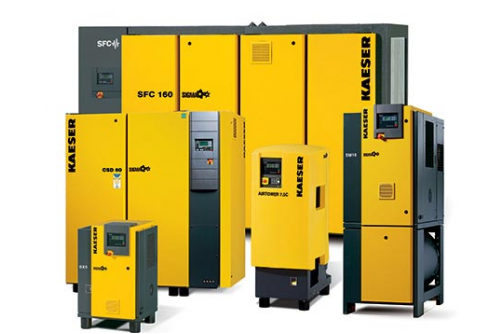
The KAESER SK series was chosen for its proven efficiency and robust design. Each unit includes premium Sigma Profile rotors, which improve air delivery while reducing energy use by up to 15 percent compared to standard screw profiles. The SK 25 series also includes:
- High-efficiency IE3 motors exceeding Australian GEMS standards
- A dual flow cooling system for optimal air temperature and reduced noise
- Internal Sigma Control 2 controller for advanced system monitoring and load management
Together, these features delivered on Teusner’s requirement for a system that was quiet, efficient, and reliable in a time-sensitive production environment.
The Results
The new compressed air system went online ahead of the 2023 vintage and supported Teusner through a full harvest with no disruption. The team reported reliable press operation, minimal maintenance needs, and lower-than-expected power consumption.
With staggered operation between the two presses, the twin-compressor setup allowed the air receiver to refill during natural breaks in production, reducing strain on the compressors and smoothing pressure across the day.
From a wine quality perspective, the system delivered clean, consistent air, a critical requirement for pneumatic presses where even small pressure fluctuations can affect juice extraction. With accurate, stable pressure, Teusner retained full control over pressing parameters, allowing them to maximise yield while preserving flavour and aroma.
Operationally, the compressors ran quietly, supporting a clean and calm working environment, a benefit noted by the production team.
“We have now had the Kaeser compressed air system in play for one harvest and it worked perfectly. We have been really happy with the quality of the machines and the level of support we received from Mobile Compressed Air.”
, Kym Teusner, Founder, Teusner Wines
Why It Worked
The Teusner project worked because it focused on actual working patterns, not theoretical design loads. Rather than oversizing the system, Mobile Compressed Air delivered a twin-compressor configuration that reflected how the winery operated, staggered presses, high peak loads, and downtime between cycles.
The inclusion of a large air receiver gave the system the capacity to manage demand without overshooting pressure targets or wasting energy. The choice of KAESER’s SK series ensured long-term reliability and reduced power consumption, with smart controls that adapt to load changes and simplify monitoring.
Teusner now benefits from a system that runs quietly, performs reliably, and requires minimal intervention during the busiest time of year.
Lessons for Other Wineries
Many wineries face similar challenges during harvest: short peak windows, high-pressure systems, and the need for reliability without overcapitalising on equipment that sits idle for much of the year.
This project shows that by understanding demand cycles and working with a trusted compressed air partner, wineries can install systems that meet performance needs without unnecessary spend.
Mobile Compressed Air continues to support Teusner Wines with servicing, monitoring, and advice, ensuring their compressed air system is ready to go whenever vintage rolls around again.