
Limited time offer: Get 10% off Air Demand Analysis. Call or email us today and mention the code ADA10. See T&Cs for details. See full terms and conditions.
Optimise performance. Lower operating costs. Improve reliability.
If you rely on compressed air, electricity is likely your single largest operating cost – often accounting for up to 90% of total compressed air costs. In many facilities, compressed air accounts for the biggest share of energy use across the site. When demand is not properly measured or understood, systems are often oversized, poorly controlled, or running continuously at low efficiency. The result is unnecessary energy waste, higher operating costs, and increased carbon emissions.
Mobile Compressed Air’s Air Demand Analysis, known as ADA, gives you a clear, computer aided assessment of how your compressed air system actually performs in real operating conditions. Rather than relying on nameplate data or assumptions, ADA measures real demand and real power usage over time, producing a precise consumption profile you can trust.
By understanding exactly how much air you use, when you use it, and how efficiently it is generated, you can plan upgrades with confidence, avoid unnecessary capital spend, and reduce energy costs without compromising reliability. The process aligns with ISO 11011 requirements and produces defensible data suitable for detailed compressed air audits and long term planning.
Why Air Demand Analysis matters
Compressed air is essential to production, but it is also one of the most expensive utilities to operate when efficiency is not actively managed. Energy losses often come from leaks, excess pressure, poor control strategies, or compressors that are mismatched to real demand.
Air Demand Analysis gives you a clear view of what your site actually uses, when demand peaks occur, and how efficiently compressed air is being generated and delivered This insight makes it far easier to identify improvement opportunities and to justify decisions using objective data rather than opinion.
For many businesses, ADA is the difference between reacting to rising electricity bills and proactively controlling energy use.
How the measurement works in practice
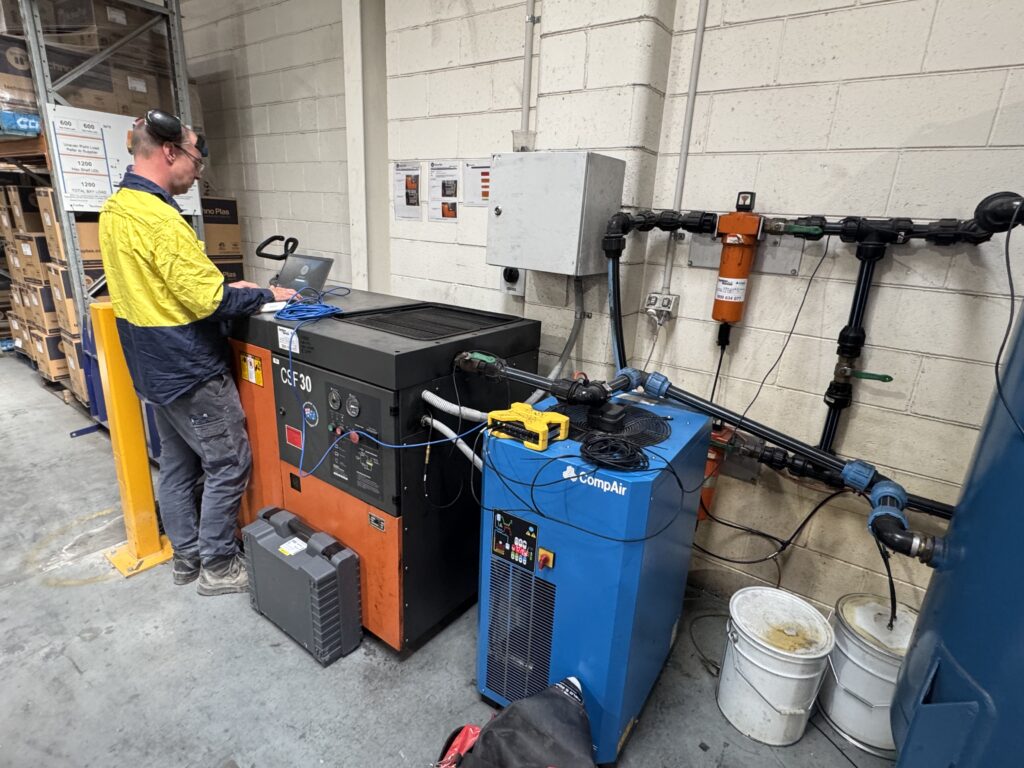
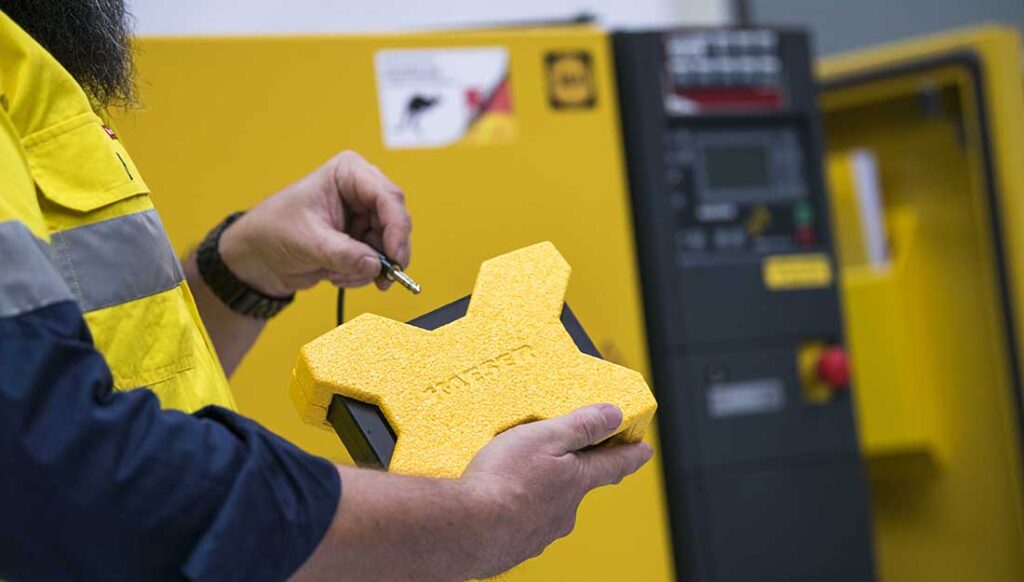
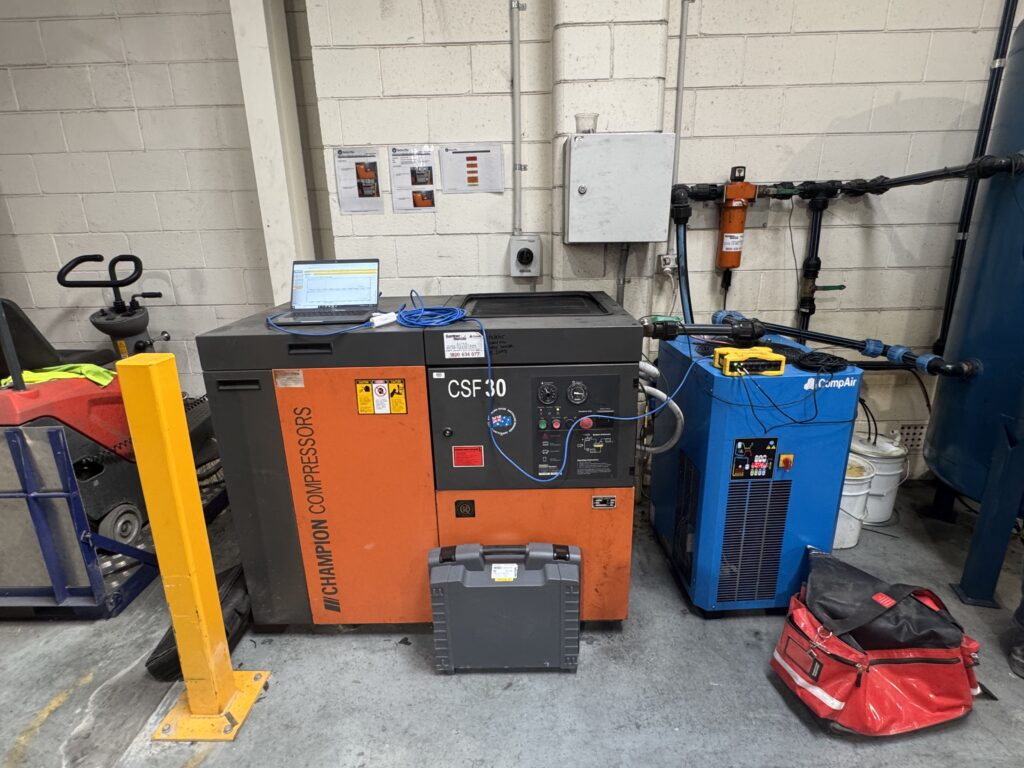
Air Demand Analysis uses modern electronic measurement equipment designed for minimal disruption and maximum accuracy. An electronic data logger is installed on your existing compressor installation with minimal effort required for access. The equipment is non intrusive and your system continues to operate as normal.
Data loggers monitor airflow and overall system performance over a set period. This gives you a clear picture of how your compressed air system behaves during normal operation, busy periods, shift changes and production fluctuations. Instead of guessing when demand rises or falls, you can see the patterns for yourself.
At the same time, power monitoring tracks how much energy each compressor is using. This means you are looking at actual consumption rather than rough estimates, so you gain an honest view of energy use and efficiency.
Together, these insights create a reliable foundation for a thorough compressed air audit. You can see where energy is being used, where it may be wasted, and where improvements will have the greatest impact.
What Air Demand Analysis delivers
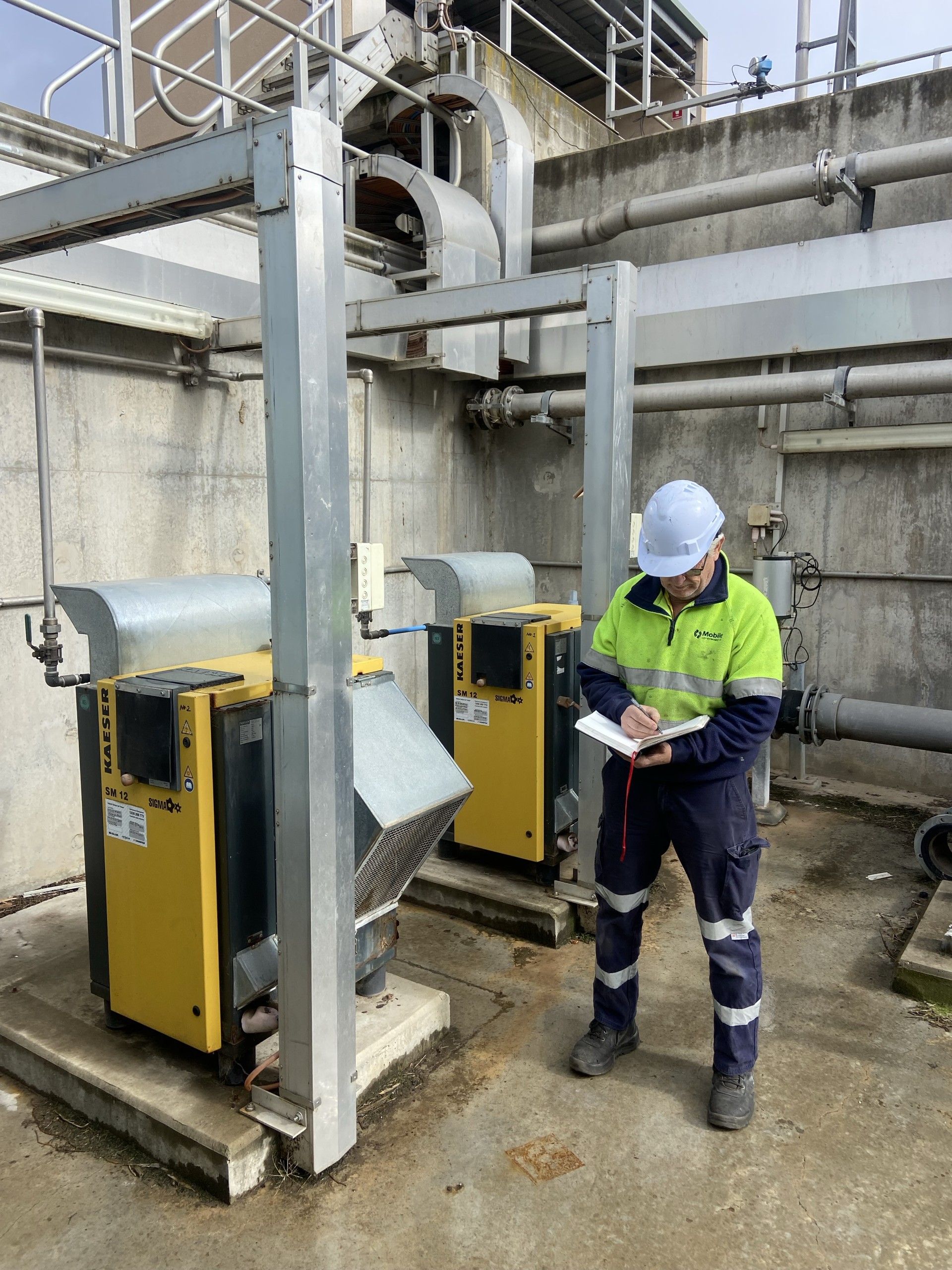
The outcome of ADA is not just raw data. It is a clear, practical assessment of how your compressed air system performs and how it can be improved. You receive a detailed report that shows total annual compressed air consumption, how demand varies over time, how effective your storage is, and how much energy is being used to generate each unit of air. Where required, the report can also include carbon emissions factors, helping you understand the environmental impact of your compressed air system. Because the data is measured at high resolution, the findings can be used to plan and design a compressed air system tailored to your actual requirements rather than theoretical demand. This helps you avoid downtime, reduce the risk of production loss, and make informed decisions about future upgrades. See a sample report.
More Info On ADA
A real example of what ADA can achieve
A national biscuit manufacturer was experiencing production stoppages and high energy use due to pressure loss across a 300-metre compressed air main feeding a critical pneumatic conveying system. To compensate, compressors were running at maximum pressure, increasing costs without fixing the root cause.
Mobile Compressed Air conducted a detailed Air Demand Analysis, which revealed a more effective solution than larger compressors or major upgrades. By installing a correctly sized local compressor near the point of use, pressure loss was eliminated, system pressure was reduced, and production stability was restored.
The outcome was immediate: consistent operation, no disruption to food-grade areas, and an energy reduction of around 27%, delivering significant ongoing cost savings.
Read the full case study to see how Air Demand Analysis can improve reliability and reduce energy costs in your operation.
Supporting energy, emissions and planning requirements
Air Demand Analysis also supports broader environmental and planning objectives. Reducing compressed air energy use directly lowers carbon emissions, helping you meet sustainability targets and reduce your operational footprint.
In South Australia and the Northern Territory, environmental air quality assessments are increasingly important, particularly in the Adelaide metropolitan region. New projects often require Air Quality Impact Assessments to predict emissions impacts on nearby residents.
Who Air Demand Analysis is for
ADA is suitable for any operation where compressed air is critical to production. It is particularly valuable if you are planning a new system, expanding production, experiencing rising electricity costs, or seeing unexplained compressor run hours.
It is also ideal where you need credible data to support energy reduction initiatives, carbon reporting, or investment decisions. Mobile Compressed Air works across a wide range of industries throughout South Australia and the Northern Territory, with hands on experience in demanding environments where reliability matters.
Book your Air Demand Analysis
Whether you are optimising an existing system or planning a new one, Air Demand Analysis gives you clarity and control over one of your largest energy costs.
Frequently Asked Questions
No. The data logging equipment is non intrusive and does not interfere with compressor control or production.
Electronic data loggers and power meters are installed to record airflow, pressure, operating status, voltage and current at one second intervals.
You receive a detailed report outlining system performance, efficiency, energy use, and practical recommendations based on measured data.
Yes. By optimising compressed air efficiency, ADA helps reduce energy consumption, lower operating costs, and cut carbon emissions.
There is no obligation. You can act on the findings internally, engage Mobile Compressed Air to assist with improvements, or retain the report as a baseline for future planning.
Simply contact our team or complete the enquiry form. We will confirm your objectives and schedule a monitoring period that suits your operations.
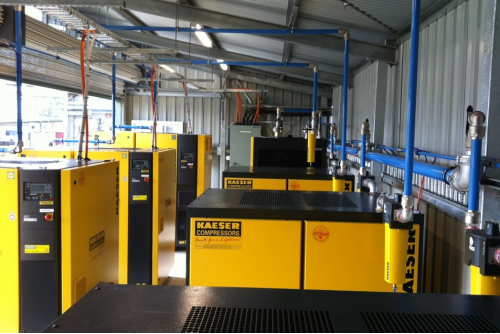
We’re ready to come to see you
Our fully mobile sales, support and maintenance team are able to visit you at your premises whenever needed. Or you can find Mobile Compressed Air’s warehouse, maintenance workshop and service centre located at For all service and emergency assistance Mobile Compressed Air provide 24/7 support, simply contact us on our office phone and you will be diverted to one of our highly skilled compressed air service technicians.
E-mail us at info@compressedair.com.au
Stay updated. Subscribe to our newsletter.
Phone: (08) 8281 1677

Enquiry